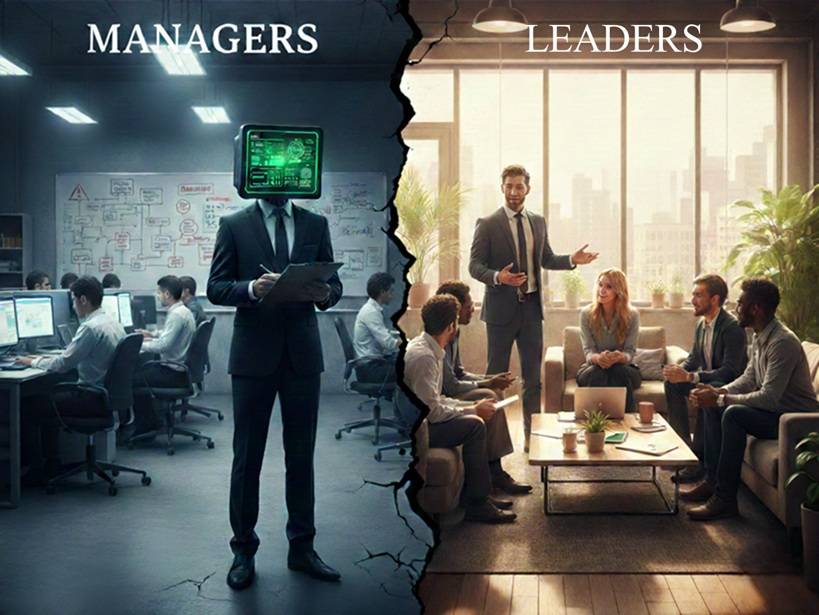

In Part 1, we diagnosed the problem. Leadership training is creating certified
managers, not actual leaders. We promote technical excellence. Organizations measure what’s convenient. Too often, frameworks are taught without principles. As a result, short-term wins slowly erode long-term culture.
The diagnosis is clear. Now let’s fix it.
Here’s the truth most organizations avoid. You cannot train someone to be a leader in a
classroom.
Skills can be taught. Frameworks can be explained. Competence can be certified. But
real leadership is developed through experience, observation, and mentorship under
people who actually know how to lead.
The good news is that leadership capacity exists in more people than we think. The
captain of a high school football team has raw leadership traits. Those traits only
become leadership through deliberate development. The same thing happens inside
organizations.
Here’s how you build a system that develops leaders instead of certifying managers.
Stop Promoting People as a Reward
This is where real change starts.
In the military, promotion means senior leaders believe you can handle more
responsibility. It comes with higher pay and higher expectations. Promotion is not a reward for past performance. Instead, it represents a bet on future capacity.
Most organizations do the opposite.
They promote people because they “deserve it,” because they were strong individual
contributors, or because promotion is the only way to retain them.
All three reasons are wrong.
When you promote someone into leadership as a reward, you are making two
assumptions. First, that they can lead. Second, that they want to. Most organizations
never test either one.
They announce the promotion and hope it works.
What to do instead
Separate leadership tracks from individual contributor tracks. Your best engineer should
not have to manage people to earn more money or influence. Create parallel paths
where contributors grow in compensation, status, and impact without leading teams.
Assess leadership capacity before promotion, not after. Do not wait until someone is in
the role to find out they cannot lead. Use observation, stretch assignments, and real
exposure. A 2024 TalentLMS survey that 45% of managers say their organizations are
not developing future leaders, and 43% say companies hire externally instead. That is
not a talent shortage. It is a system failure.
Make leadership a choice, not an assumption. Some of your best people do not want to
lead. Forcing them into leadership damages them, their teams, and your organization.
Identify Leadership Potential Early
Senior leaders should actively look for leadership signals well before someone has a
title.
You are looking for people who take initiative, think about team success, earn trust
naturally, handle conflict without drama, and step up when things get hard.
These traits show up long before formal authority. Your job is to notice them and create
paths to develop them.
What to do instead
Create observation opportunities for senior leaders. Do not rely only on performance
reviews and org charts. Spend time in the field. Sit in meetings. Watch how people act
when they think no one important is watching.
Build talent pipelines, not promotion queues. A promotion queue is passive. A pipeline
deliberately identifies, develops, and positions people for roles they are suited for.
Nearly 60% of first-time managers in the US report receiving no training when they
transitioned into leadership. That is not an individual failure. It is a pipeline problem.
Ask the people closest to the work. Frontline supervisors and mid-level leaders see
things you do not. Ask them who they would trust to lead if they were gone. Their
answers will tell you more than any assessment tool.
Mentor Through Real Experience, Not Coursework
When I was a squadron commander, I brought my second-in-command into observe
disciplinary actions involving Airmen who’d gotten into trouble. She watched how I
handled those situations. She already had formal training. What she gained was
exposure to judgment in real conditions.
That is how leaders are developed.
Courses teach the what. Mentorship teaches the how and the why. More importantly, it
shows what leadership looks like under pressure, when frameworks fall apart and
judgment matters.
The same 2024 TalentLMS study also found 30% of managers say mentoring and
coaching are the most lacking parts of leadership development. Organizations fund
courses and starve people of access to experienced leaders.
What to do instead
Create structured shadowing programs. Pair high-potential employees with strong
leaders. Let them observe real decisions, conflict resolution, and performance
conversations. Not presentations. Real work. Organizations with mentoring programs
see promotions happen five to six times more often.
Make mentorship a leadership responsibility. If you are a senior leader and you are not
developing someone below you, you are managing tasks, not leading people. Make
development part of performance expectations.
Use projects as development tools. Assign high-stakes work and pair developing
leaders with experienced ones. The project becomes the classroom. Coaching
happens in real time.
Teach Principles, Not Frameworks
Frameworks are tools. Principles are foundations.
The feedback sandwich is a framework. The principle is that people need both
recognition and direction, and that criticism lands better when trust exists.
When you teach only the framework, people apply it mechanically. When you teach the
principle, people adapt based on context.
What to do instead
Start with why. Before teaching a process, explain why it matters. When people
understand the principle, they can adjust. When they only know the steps, they freeze
the moment reality changes.
Use real examples from your organization. Generic case studies feel abstract. Use
situations people recognize. Show what happened when principles were applied well
and what happened when they were ignored.
Ask leaders to solve problems, not recite answers. Ask what they would do when a
strong performer keeps missing deadlines or disengages. Their response reveals
whether they understand judgment or just memorized steps.
Measure What Actually Matters
Someone can ace a leadership course and still be the person everyone hopes transfers
out.
That happens because most programs measure completion, not leadership impact.
Measure these instead:
- Attrition on their team. Who is leaving and why. Voluntary turnover is the most honest feedback a leader will ever get.
- Engagement from direct reports. Gallup shows managers account for roughly 70% of engagement variance. If the team is disengaged, look at the leader.
- The “would they follow you” test. If this leader left tomorrow, how many people would choose to follow them. You do not need a survey. You already know the answer.
- Development of others. Who has grown. Who has been promoted. Leaders who do not develop people are not leading.
- How they handle failure. Do they take responsibility. Do they protect their team. Do they learn or blame.
Measure these consistently. Weight them heavily. Make it clear that results matter, but culture sustains results.
Hold the Standard and Develop the Underperformers
Standards without support is cruelty. Support without standards is chaos.
When a leader underperforms, diagnose the issue. Capacity, training, or will.
If it’s capacity, move them to a better fitting role. Not everyone should lead.
If it’s training, invest, mentor, and coach. Practice in lower-risk settings.
If it is will, and standards are still ignored after support, then separation becomes the
right call.
What to do instead
Create 90-day development plans. Be specific. Assign a mentor. Check progress
weekly. At the end, decide honestly.
Do not tolerate mediocrity in leadership. A mediocre leader damages everyone around
them.
Be public about standards and support. Fair accountability builds trust. Inconsistency
destroys it.
Build a Culture Where Leadership Development Never Stops
Leadership development is not a program. It is a daily practice.
What to do instead
Make leader-as-teacher the norm. Senior leaders should visibly mentor and coach.
Credibility should be earned through developing others.
Create cross-functional exposure. Leaders need perspective beyond their silo. Rotate
high-potential people. Stretch their understanding before promotion.
Invest in development at every level. Leadership challenges increase with seniority. A
2024 study found over half of managers report burnout, yet few receive training on
supporting mental and emotional health. These challenges require ongoing
development, not one-time courses.
Reward leaders who develop leaders. Hoarding talent is control, not leadership.
The Uncomfortable Question
If you stopped leadership training tomorrow and instead had your best leaders spend
that time coaching, mentoring, and modeling behavior, would you develop better
leaders?
For most organizations, the answer is yes.
Leadership is not taught. It is observed, practiced, and refined.
Training should support experience, not replace it.
What This Looks Like in Practice
When I was a squadron commander, I brought my deputy into real decisions.
Discipline, conflict, accountability, and bad news.
She learned by watching, asking questions, and eventually doing it herself with
coaching.
That is leadership development.
Not certifications. Proximity, observation, and guided practice.
The Bottom Line
Your leadership problem is not a training problem. It is a systems problem.
You promote the wrong people. Organizations measure the wrong things.
Tools are taught without judgment. Developing leaders are denied access to real leaders.
Fix the system and the leadership gap closes.
Build pipelines, not queues. Mentor deliberately. Teach principles. Measure culture
and trust. Hold standards while investing in people.
And stop promoting people as a reward.
Promote them because they have demonstrated judgment, character, and capacity
through real observation and mentored practice.
Leadership is both nature and nurture. Capacity matters. Systems matter more.
The question is whether you are willing to build one that works.
Additional Reading:
https://www.talentlms.com/research/leadership-development-survey
https://www.ccl.org/articles/leading-effectively-articles/first-time-managers-must- conquer-these-challenges/
https://executiveeducation.wharton.upenn.edu/thought-leadership/wharton-at- work/2024/09/new-leaders-need-training/
https://guider-ai.com/blog/mentoring-statistics-the-research-you-need-to-know/
https://www.mentorcliq.com/blog/mentoring-stats
https://knowledge.wharton.upenn.edu/podcast/knowledge-at-wharton- podcast/workplace-loyalties-change-but-the-value-of mentoring-doesnt/
https://www.gallup.com/services/182138/state-american-manager.aspx
https://www.nami.org/support-education/publications-reports/survey-reports/the-2024- nami-workplace-mental-health-poll/
https://www.ipsos.com/en-us/NAMI-Ipsos-workplace-mental-health-2024